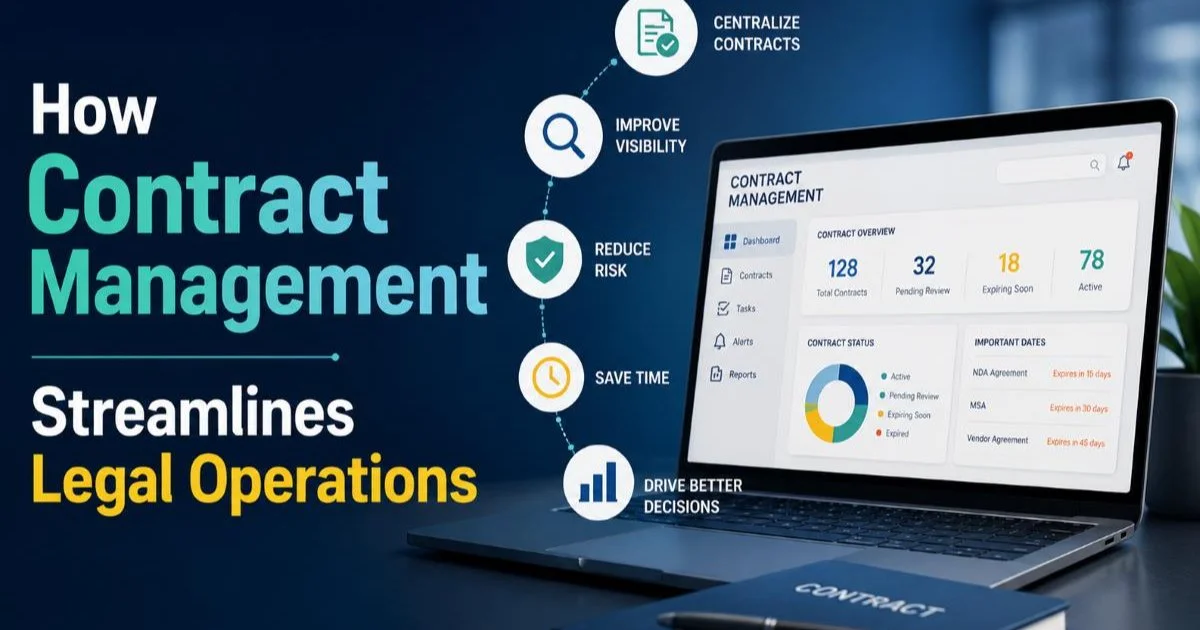
How contract management streamlines legal operations is a question every in-house legal team eventually confronts as workloads grow and deadlines multiply. When contracts sit in scattered email threads, shared drives, and filing cabinets, even simple tasks like renewal tracking or clause review become time sinks. The real cost isn't just inefficiency; it's missed obligations, compliance gaps, and strained relationships with business stakeholders who need faster turnarounds.
A structured approach to managing contracts transforms legal departments from reactive bottlenecks into proactive business partners. Understanding how legal operations work in practice makes it clear why contract management sits at the center of that transformation.
This guide walks through four concrete steps your team can implement to bring order, speed, and visibility to the entire contract lifecycle. Each step includes specific actions, not abstract principles, so you can start making changes this week.
Key Takeaways
- Centralized contract repositories eliminate version confusion and reduce retrieval time by up to 80%.
- Standardized templates cut contract drafting cycles from weeks to days for routine agreements.
- Automated milestone tracking prevents missed renewals, expirations, and compliance deadlines reliably.
- Workflow automation frees legal teams to focus on strategic work instead of administrative tasks.
- Integrated reporting gives leadership real-time visibility into contract status and portfolio risk.
Step 1: Centralize Your Contract Repository
Choosing the Right Storage Structure
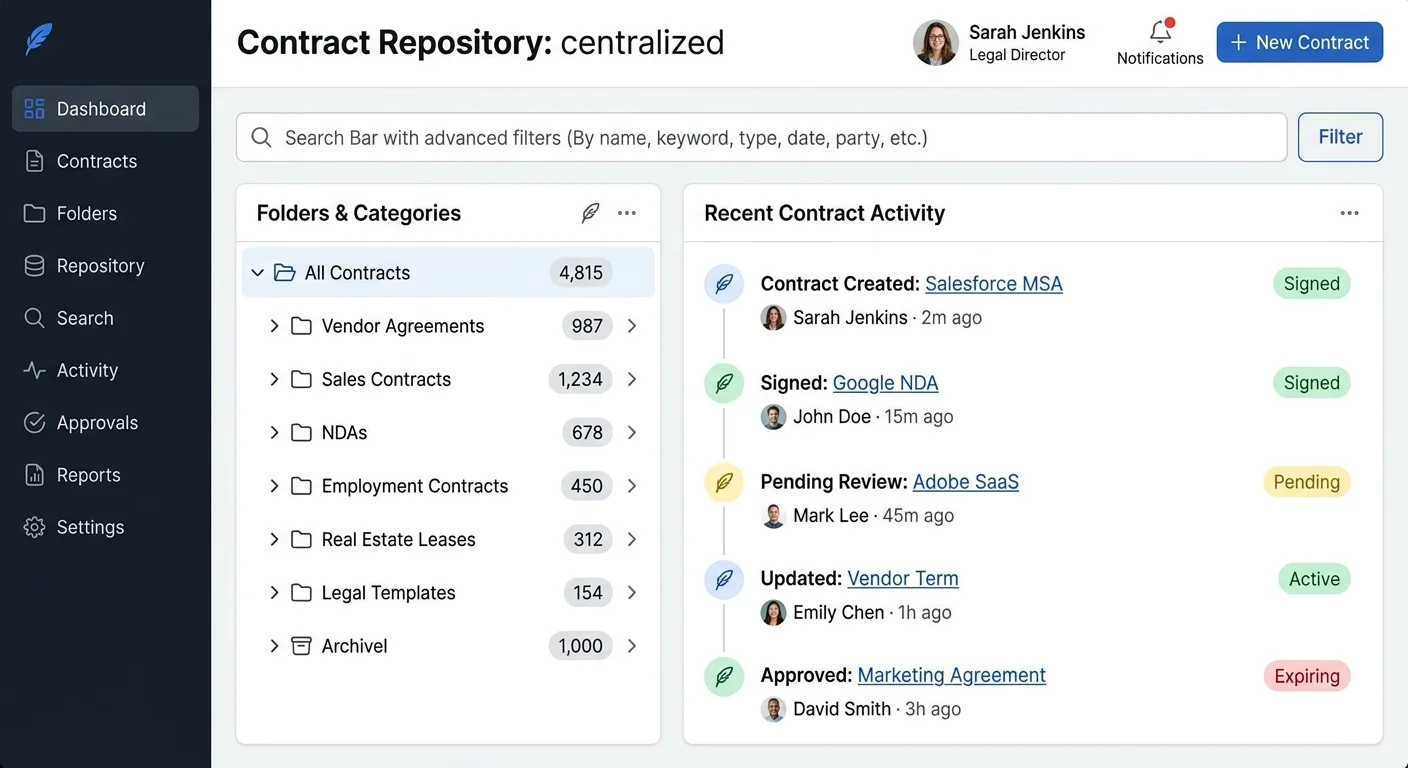
The foundation of how contract management streamlines legal operations starts with putting every agreement in one place. Most legal teams operate with contracts spread across five or more storage locations: email attachments, local drives, cloud folders, physical files, and individual laptops. This fragmentation means that finding a single executed agreement can take 30 minutes or longer, and sometimes the document simply can't be located at all. A centralized repository solves this by creating a single source of truth.
When selecting your repository structure, organize by contract type first, then by counterparty. Categories like NDAs, vendor agreements, employment contracts, and licensing deals give your team intuitive navigation paths. Tagging metadata (effective date, expiration, responsible attorney, business unit) makes search powerful. The goal is that any team member can locate any contract in under 60 seconds, regardless of who originally handled the deal.
Migration and Cleanup
Migration is the hard part, and you should not underestimate it. Start with active contracts first, meaning anything currently in force or under negotiation. Assign each contract a unique identifier and log it in a master index. During migration, flag contracts with missing signatures, expired terms, or ambiguous renewal clauses. This cleanup process often reveals obligations your team didn't know existed, which alone justifies the effort.
Dedicate one team member to migration for two weeks rather than splitting the task across the whole team. Concentrated effort produces more consistent results.
For vendor and contractor agreements, pay special attention to termination provisions and service-level commitments during the migration. These contracts tend to auto-renew silently, and centralizing them gives you the visibility to make informed decisions before renewal windows close. Document organization at this stage pays dividends for years because every future process depends on the quality of your repository.
Step 2: Standardize Templates and Playbooks
Building Your Template Library
Once your contracts are centralized, the next step is reducing the time it takes to create new ones. Template standardization is where legal teams reclaim the most hours. Analyze your last 12 months of contracts and identify the top five to eight agreement types by volume. For most in-house legal departments, these include NDAs, master service agreements, SaaS subscriptions, consulting agreements, and data processing addenda.
Build a template for each high-volume type with pre-approved language that business teams can use with minimal legal review. Include clearly marked optional clauses (for example, indemnification caps that vary by deal size) and lock down provisions that should never change, like governing law or dispute resolution. This approach lets your legal department handle three to four times the contract volume without proportionally increasing headcount.
Creating Negotiation Playbooks
Templates cover your paper; playbooks cover the negotiation. A playbook defines your preferred position, acceptable fallback positions, and absolute deal-breakers for each major clause type. When a counterparty redlines your limitation of liability clause, your business attorney should know instantly whether the proposed change falls within acceptable parameters or needs escalation. Playbooks eliminate the back-and-forth of checking with senior counsel on routine redlines.
Distribute your playbooks in a format that's easy to reference during live negotiations, not as 40-page PDFs that nobody reads. A simple table listing clause types, preferred language, and fallback positions works better than a narrative document. Update playbooks quarterly based on market trends and lessons from recent negotiations. Contract management becomes truly efficient when both templates and playbooks work together as a system.
Step 3: Automate Tracking and Compliance Workflows
Setting Up Milestone Alerts
Manual tracking of contract deadlines is where legal operations break down most visibly. A single missed 30-day renewal notice window can lock your company into an unfavorable agreement for another year. Automated alerts solve this problem by sending notifications at predetermined intervals before key dates: 90 days, 60 days, and 30 days before expiration or renewal. The alerts should go to both the responsible attorney and the business owner of the relationship.
Do not rely solely on calendar reminders for contract deadlines. Individual calendars get cluttered, people leave the company, and critical dates fall through the cracks.
Beyond renewals, track compliance milestones embedded within agreements. Insurance certificate delivery dates, audit rights exercise windows, and regulatory filing deadlines all live inside your contracts. Extract these obligations during the repository migration (Step 1) and feed them into your tracking system. Exploring workflow automation tools designed for small teams can help you build these alert systems without enterprise-level budgets or IT department involvement.
Compliance Monitoring Integration
Contract compliance tracking works best when it connects to your broader compliance program. If your company operates under GDPR, HIPAA, or industry-specific regulations, your contracts contain obligations that map directly to those frameworks. Data processing agreements specify breach notification timelines. BAAs define permitted uses of protected health information. When tracking is automated, your compliance team gets real-time visibility into which obligations are approaching and which are overdue.
"The legal teams that operate most effectively are the ones that never get surprised by a deadline."
Build a monthly compliance dashboard that shows obligation status across your entire contract portfolio. Color-code by status: green for on track, yellow for approaching deadline, red for overdue. Share this dashboard with business unit leaders so they understand their own contractual responsibilities. This transparency shifts accountability from legal being the sole enforcer to a shared ownership model where business teams proactively manage their obligations.
| Milestone Type | Alert Schedule | Primary Owner | Escalation Path |
|---|---|---|---|
| Contract Renewal | 90, 60, 30 days | Business Unit Lead | Legal Counsel at 30 days |
| Insurance Certificates | 60, 30 days | Procurement | Risk Management at 15 days |
| Regulatory Filings | 45, 15 days | Compliance Officer | General Counsel at 7 days |
| Payment Milestones | 30, 14 days | Finance | Legal Counsel at 7 days |
| Performance Reviews | 60, 30 days | Business Unit Lead | VP Operations at 14 days |
Step 4: Measure Performance and Optimize
Key Metrics to Track
You cannot improve what you do not measure. How contract management streamlines legal operations becomes quantifiable when you track the right metrics. Start with cycle time: how many days pass from contract request to full execution? Most legal teams discover their average cycle time is 21 to 28 days, with significant variation between contract types. Breaking this down reveals where bottlenecks actually sit, whether in drafting, internal review, or counterparty negotiation.
Track volume metrics alongside speed metrics. Contracts processed per attorney per month tells you about capacity. The ratio of standard-template contracts to custom-drafted agreements shows how well your template library covers actual demand. If more than 30% of your contracts require custom drafting, your template library has gaps that need attention. These numbers give you the evidence to request additional resources or invest in better tools.
Continuous Improvement Cycles
Set quarterly review meetings to analyze your contract management metrics and identify improvement opportunities. Bring data showing which contract types have the longest cycle times, which clauses generate the most negotiation rounds, and which business units submit the most requests. This data-driven approach replaces anecdotal complaints with actionable insights. Each quarter, pick one or two specific improvements to implement and measure their impact in the following quarter.
Solicit feedback from business stakeholders during these reviews. They experience your contract process from the outside, and their frustrations often point to fixable problems. Maybe sales teams need a faster NDA process for prospective clients. Maybe procurement needs better visibility into where their vendor agreements sit in the approval chain. Understanding how contract management streamlines legal operations from the business user's perspective ensures your optimizations serve the whole organization, not just the legal department's internal preferences.
Resist the urge to overhaul everything at once. Incremental improvements compound over time and are far more sustainable than massive system changes.
Finally, benchmark your performance against industry standards. The Association of Corporate Counsel publishes annual data on legal department metrics that give you context for your own numbers. If your NDA cycle time is 7 days and the industry average is 3, you know where to focus. If your contract-to-attorney ratio exceeds the benchmark, you have data to support a hiring case. Measurement transforms contract management from an invisible back-office function into a demonstrable value driver.

Frequently Asked Questions
?How long does contract repository migration typically take?
?Can a shared drive work instead of a dedicated CLM platform?
?What hidden costs come up during a contract cleanup migration?
?Does standardizing templates really cut drafting time from weeks to days?
Final Thoughts
How contract management streamlines legal operations comes down to four practical steps: centralize, standardize, automate, and measure. Each step builds on the one before it, creating a system that handles growing contract volumes without proportionally growing headcount or stress.
The teams that implement these steps methodically see faster turnarounds, fewer missed obligations, and stronger partnerships with the business units they serve. Start with your repository, build your templates, automate your tracking, and let the data guide your next improvement. Your future self will thank you for the investment.
Disclaimer: Portions of this content may have been generated using AI tools to enhance clarity and brevity. While reviewed by a human, independent verification is encouraged.