Legal operations management is the discipline of organizing, streamlining, and optimizing every function within a corporate legal department, from document handling and compliance tracking to contract execution and internal process governance. For in-house legal and compliance teams, the term covers far more than filing cabinets and calendar reminders.
It represents a strategic approach to running legal as a business unit with measurable outcomes. As regulatory complexity grows and corporate legal budgets face greater scrutiny, the need for structured legal operations management has never been more pressing.
Teams that ignore it risk drowning in manual workflows, missed deadlines, and fragmented knowledge. Those that embrace it gain visibility, speed, and defensible audit trails. This article breaks down what it actually means, how it works in practice, and why your team should care.
Key Takeaways
- Legal operations management coordinates documents, contracts, compliance, and internal processes under one framework.
- Contract workflow automation reduces cycle times by eliminating manual handoffs between stakeholders.
- Compliance task management prevents regulatory penalties through structured tracking and accountability.
- Legal ops software centralizes data so teams can measure performance and spot bottlenecks quickly.
- Starting small with one workflow and scaling outward produces better adoption than big-bang implementations.
How Legal Operations Management Works
The Core Components
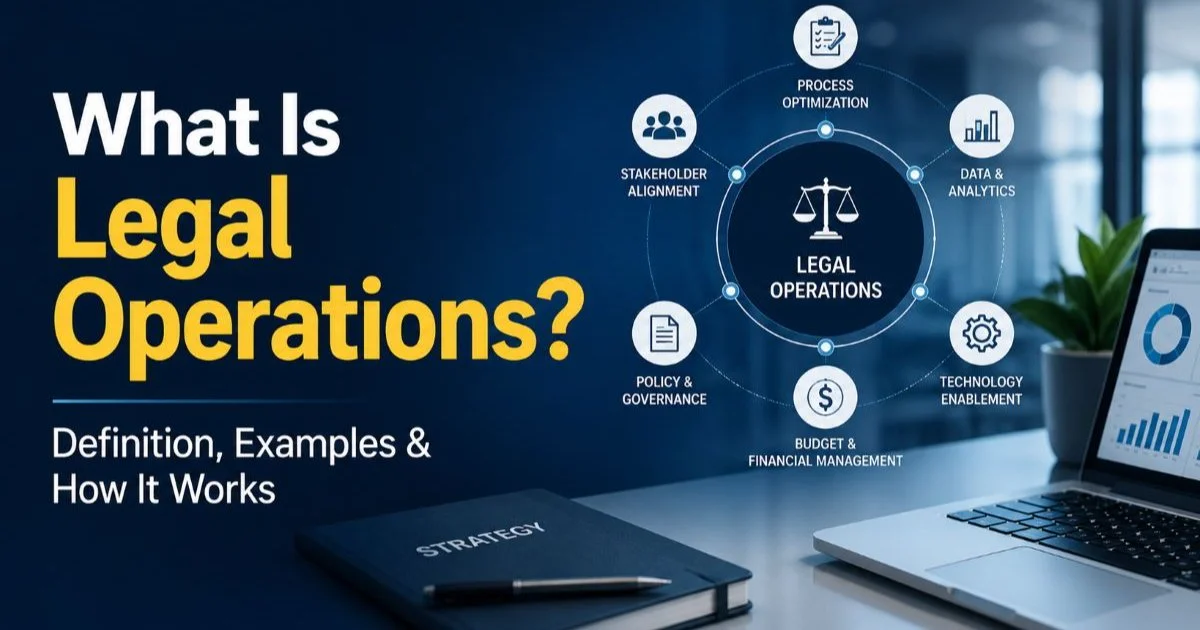
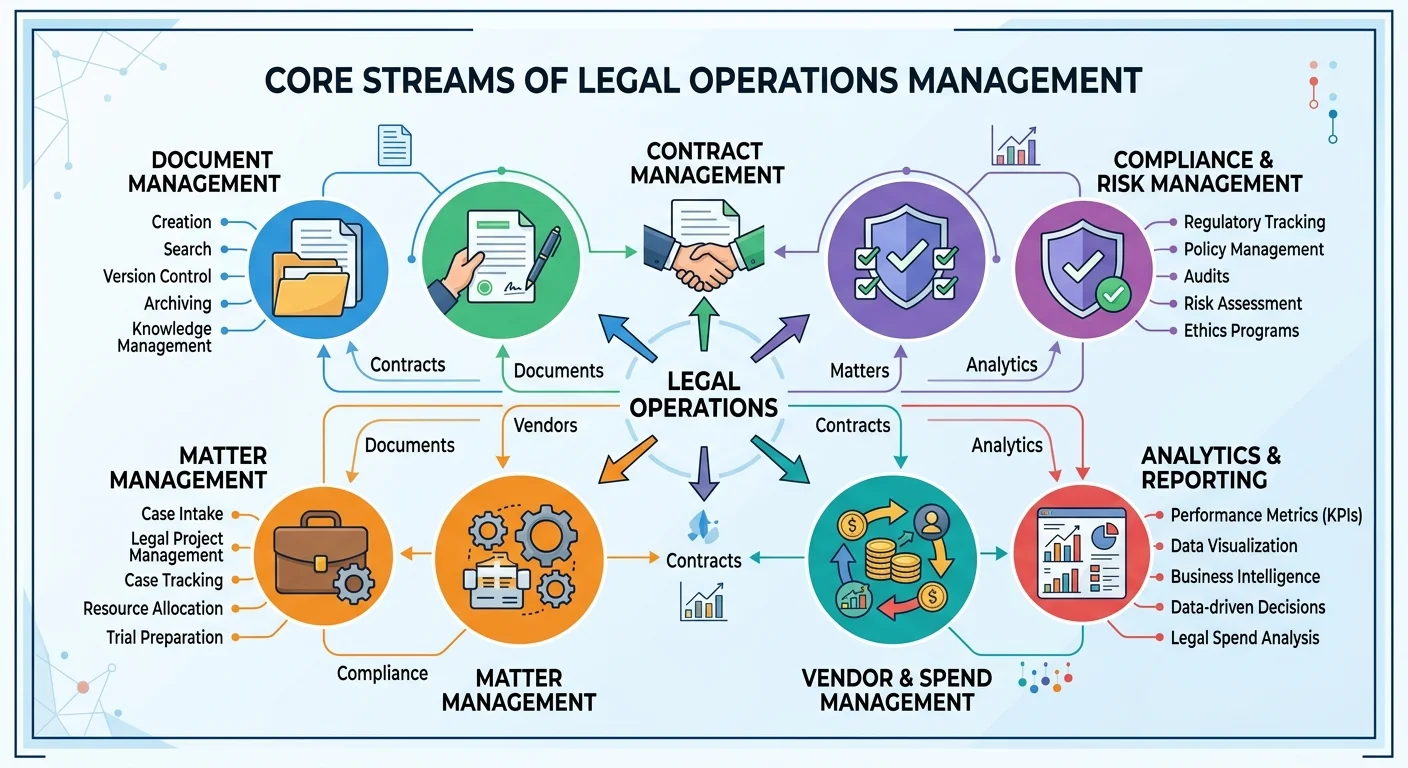
At its foundation, legal operations management breaks the legal department into functional streams: legal document management, contract lifecycle oversight, compliance task management, matter tracking, vendor management, and spend analytics. Each stream has its own inputs, outputs, and stakeholders. By mapping these streams explicitly, a legal ops leader can identify where work gets stuck, where duplication occurs, and where risk accumulates silently. The mapping exercise alone often reveals that a surprising percentage of lawyer time goes toward administrative coordination rather than substantive legal analysis.
Once the streams are mapped, the team defines standard operating procedures for each one. A contract request, for example, follows a predefined path: intake form, risk assessment, drafting, review, approval, execution, and storage. Each step has an owner, a timeframe, and escalation rules. This procedural clarity is what separates reactive legal teams from proactive ones. Without it, every request becomes ad hoc, and institutional knowledge lives only in individual inboxes.
Technology Layer
Technology acts as the connective tissue. Legal ops software platforms aggregate workflows, documents, deadlines, and reporting into a single environment. Tools range from purpose-built contract lifecycle management systems to broader platforms that handle matter management and compliance tracking together. The right choice depends on team size, budget, and the complexity of your internal legal processes. A ten-person legal team at a mid-market company has very different needs than a fifty-person department at a multinational.
Integration matters as much as the core platform. Legal operations management only works when the legal system talks to finance, procurement, HR, and the business units it serves. API connections, single sign-on, and shared data taxonomies prevent the legal department from becoming an information silo. Modern platforms also incorporate AI capabilities. Large language models tuned for business applications can assist with contract analysis, clause extraction, and first-draft generation, though human review remains non-negotiable for anything with binding effect.
Before selecting any legal ops software, audit your existing tool stack. Many teams already own underused features in platforms they pay for monthly.
Why It Matters for In-House Teams
In-house legal teams face a paradox: business leaders expect faster turnaround and broader coverage, yet headcount growth rarely keeps pace with demand. Legal operations management addresses this gap by making existing resources more productive. When every contract request follows a consistent intake process, lawyers spend less time chasing information and more time advising on risk. When compliance deadlines are tracked centrally, nothing slips through because someone was on vacation. The benefits of investing in legal operations extend well beyond efficiency; they include better risk visibility, stronger cross-functional relationships, and demonstrable ROI for the legal function.
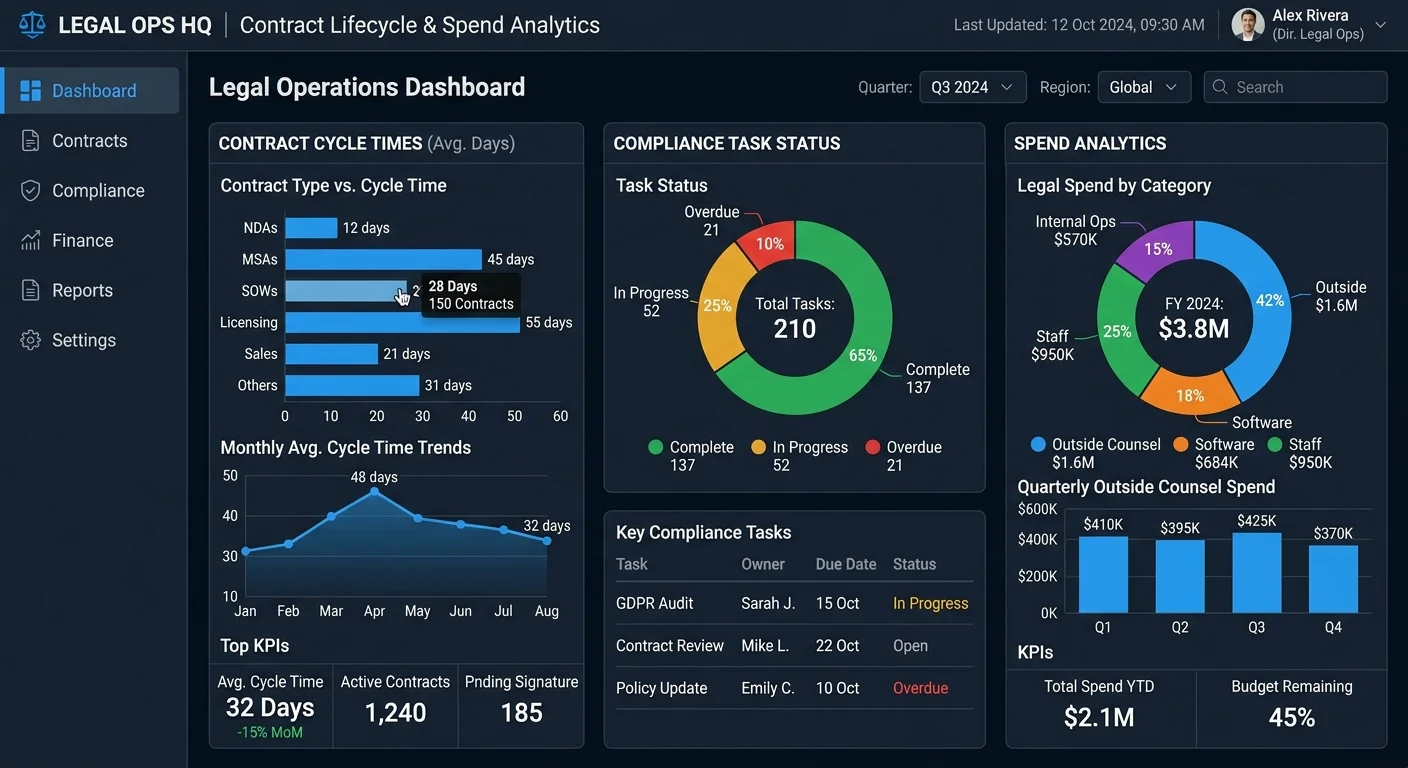
Budget transparency is another significant advantage. Legal departments that track outside counsel spend, technology costs, and internal time allocation by matter type can make data-driven decisions about where to invest and where to cut. Without this data, budget conversations with the CFO become guesswork, and the legal department loses credibility. Contract workflow automation alone can produce measurable savings by shortening negotiation cycles and reducing reliance on external counsel for routine agreements.
Real-World Use Cases
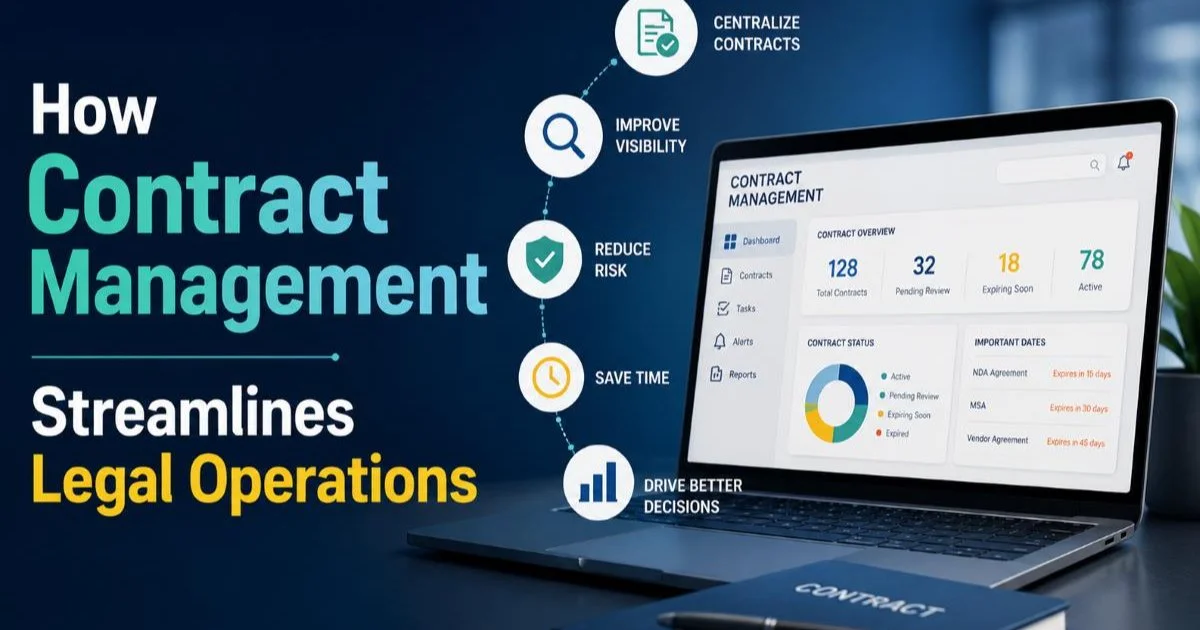
Consider a SaaS company processing 200 vendor contracts per quarter. Before implementing structured legal operations management, their average contract cycle time was 23 days, and 15% of contracts contained unapproved non-standard terms that only surfaced during audit. After deploying a contract lifecycle management tool with automated playbook enforcement, cycle time dropped to 11 days and non-standard term incidents fell below 2%. These are not hypothetical numbers; they reflect common outcomes reported by mid-market legal teams adopting structured workflows.
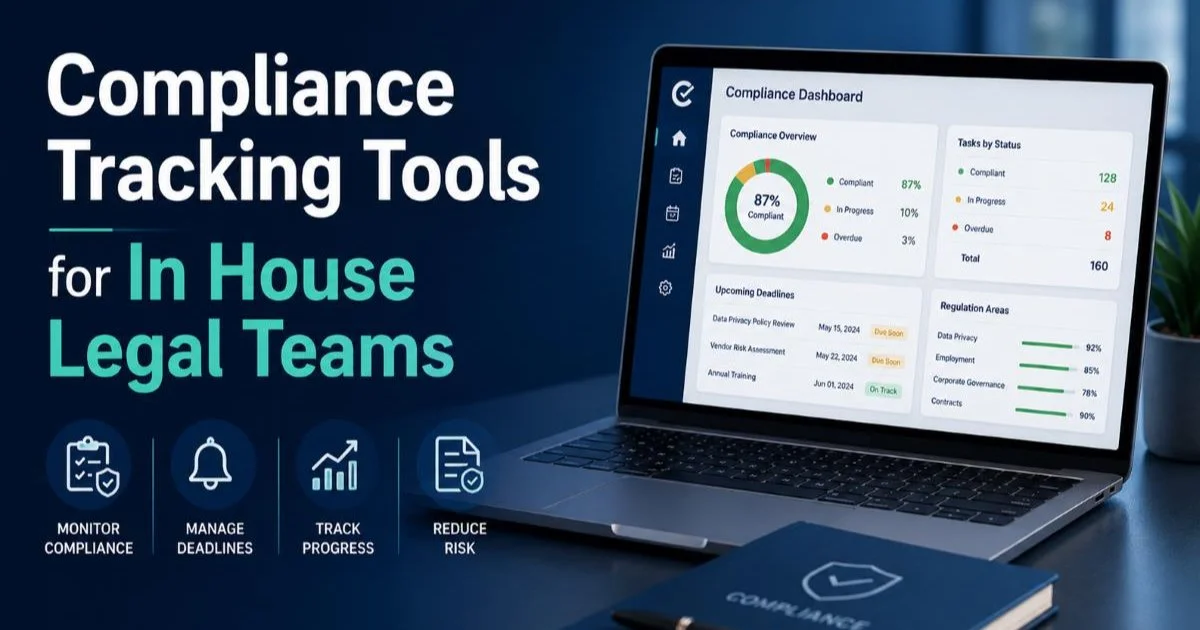
Another use case involves regulatory compliance. A financial services firm managing obligations across multiple jurisdictions used spreadsheet-based compliance task management. Deadlines were missed, ownership was ambiguous, and audit preparation consumed weeks of paralegal time. Migrating to a centralized compliance tracker with automated reminders and evidence collection cut audit prep time by 60% and eliminated missed filings entirely in the first year. The tool did not replace judgment; it replaced the fragile scaffolding of emails and calendar entries that judgment depended on.
"Legal operations management does not replace legal judgment; it replaces the fragile scaffolding that judgment depends on."
Common Misconceptions
The most persistent misconception is that legal operations management is just about buying software. Technology is a component, not the whole answer. A team that purchases an expensive platform without first defining its processes, data standards, and governance model will simply digitize its existing chaos. Process design comes first. Technology accelerates what good process makes possible. Teams that skip the process step often blame the software for failure that was structural from the start.
Another misconception is that legal ops is only for large departments. In reality, smaller teams often benefit more because they have less margin for inefficiency. A three-person legal team where one lawyer handles everything from employment law to commercial contracts needs standardized templates, clear intake channels, and automated reminders more than a large team with dedicated specialists. The scale of the tooling differs, but the discipline applies universally.
Legal ops does not require enterprise software. Many small teams start with project management tools configured for legal workflows and graduate to purpose-built platforms as they grow.
Some attorneys view legal operations management as a threat to professional autonomy. This concern misses the point entirely. Structured operations free lawyers from administrative burden so they can focus on high-value advisory work. The goal is not to standardize legal thinking but to standardize the administrative and procedural work that surrounds it. When a lawyer no longer needs to track down a countersigned PDF or remind a business unit to submit an intake form, they reclaim hours for the work their training actually prepared them to do.
How It Relates to Similar Concepts
Legal Ops vs. Legal Tech
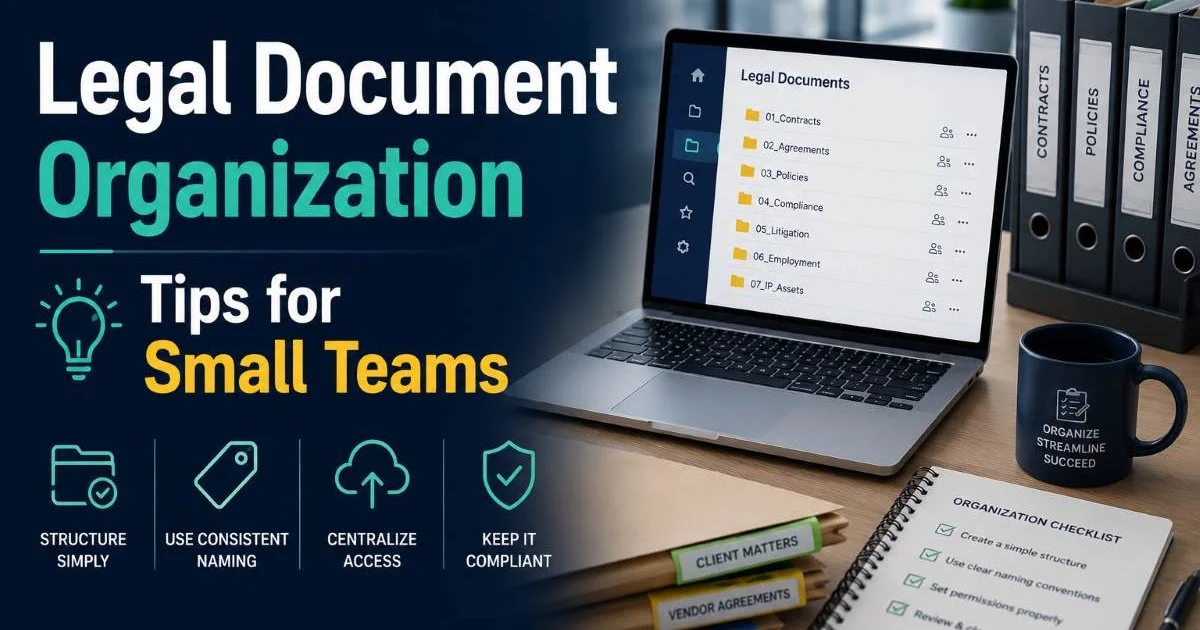
Legal technology refers to the tools themselves: e-signature platforms, document management systems, AI review tools, and practice management software. Legal operations management is the broader discipline that determines which tools to adopt, how to configure them, what processes they support, and how success is measured. You can have legal tech without legal ops, but you will likely underutilize it. Legal document management, for instance, is a technology category. Deciding how documents are named, tagged, stored, retained, and disposed of is an operations decision.
Legal project management is a subset of legal ops focused on individual matters or transactions. It applies project management principles (scope, timeline, budget, resources) to legal work. Legal operations management encompasses project management but also covers the systemic concerns: vendor strategy, technology roadmap, process improvement, and cross-functional alignment. Think of project management as the tactical layer and operations management as the strategic layer.
Governance, risk, and compliance (GRC) platforms overlap with legal ops in the compliance domain. GRC tools often serve risk management, internal audit, and IT security teams alongside legal. The overlap is healthy, but legal teams should own their compliance workflows rather than relying entirely on a GRC system designed primarily for other functions. Accessibility considerations also apply; any platform your team uses should meet accessibility standards. Screen reader testing practices from web development offer useful parallels for evaluating whether your legal tools are usable by all team members.
Finally, knowledge management is an often-overlooked dimension. Playbooks, precedent banks, clause libraries, and policy repositories all fall under legal operations. When a new attorney joins the team and can self-serve answers to routine questions because the knowledge base is well-organized, that is legal ops working quietly in the background. Without it, every question becomes an interruption, and institutional memory walks out the door every time someone leaves the company.
Do not treat legal operations as a one-time project. It requires ongoing governance, periodic process reviews, and continuous feedback loops with internal clients.
Frequently Asked Questions
?How do you map legal department functional streams effectively?
?Is a purpose-built CLM better than a broader legal ops platform?
?How long does it take to see results from a legal ops implementation?
?Does legal ops management only apply to large in-house legal departments?
Final Thoughts
Legal operations management is not a trend or a buzzword. It is the operational backbone that allows in-house teams to deliver consistent, measurable, and scalable legal services. Start by mapping your current workflows, identifying the biggest friction points, and addressing those first with process changes before layering in technology.
The teams that treat internal legal processes as a system to be managed, rather than a series of fires to be extinguished, will outperform their peers. Your lawyers did not go to law school to chase signatures; give them the infrastructure to do what they do best.
Disclaimer: Portions of this content may have been generated using AI tools to enhance clarity and brevity. While reviewed by a human, independent verification is encouraged.