Legal operations metrics that drive better results aren't just numbers on a dashboard. They're the difference between a legal department that reacts to problems and one that prevents them. Consider a mid-size SaaS company with a 12-person in-house legal team that was drowning in contract backlogs, missed compliance deadlines, and budget overruns.
Their general counsel knew things were broken but couldn't pinpoint where. Without measurable benchmarks, every quarterly review devolved into anecdotal finger-pointing.
This case study follows that company's transformation over 18 months, from chaotic firefighting to data-driven excellence. If you're part of an in-house legal or compliance team, the lessons here apply directly to your daily work. Understanding what legal operations actually means and how it works is the foundation for everything that follows.
Key Takeaways
- Tracking cycle time for contracts reduced average turnaround from 23 days to 9 days.
- Compliance tracking dashboards cut missed regulatory deadlines by 87% within one year.
- Spend visibility metrics helped the team reduce outside counsel costs by 31%.
- Document organization scores improved internal retrieval time by over 60%.
- Legal operations metrics that drive better results require consistent measurement and team buy-in.
The Problem: A Legal Team Flying Blind
The company, which we'll call NovaTech (name changed for confidentiality), had grown from 200 to 1,400 employees in four years. Their legal team scaled from three attorneys to twelve, but their processes never matured alongside headcount. Contracts were managed through shared drives and email threads. Compliance deadlines lived in individual calendars. When the CFO asked the general counsel for a quarterly spend report, it took two paralegals three days to compile one manually.
Symptoms of Dysfunction
Three specific incidents triggered the overhaul. First, a vendor contract auto-renewed at unfavorable terms because nobody tracked the opt-out deadline. That single oversight cost $340,000. Second, a regulatory filing in the EU was submitted six days late, resulting in a formal warning from regulators. Third, the sales team complained that contract approvals were taking an average of 23 business days, and they were losing deals to faster competitors.
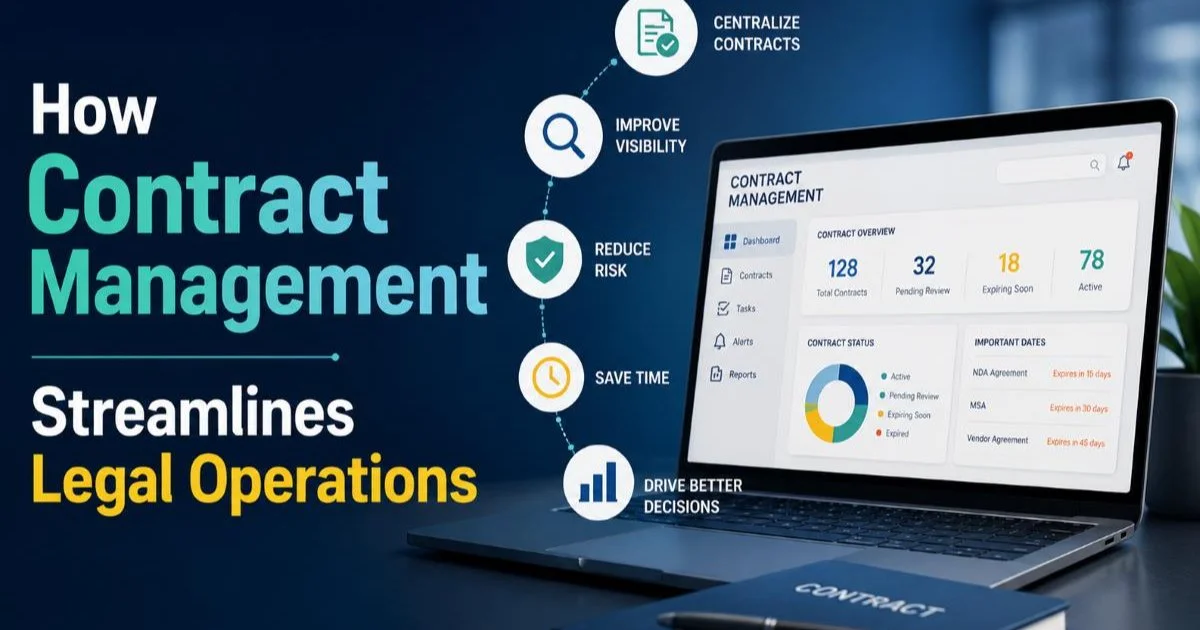
The general counsel recognized these weren't isolated failures. They were symptoms of a management problem. Without metrics, the team had no visibility into bottlenecks, no way to forecast workload, and no evidence to request additional budget. As many teams focused on how contract management streamlines legal operations, NovaTech hadn't even started that conversation yet. The board was growing impatient, and something had to change.
Anecdotal reporting creates a false sense of control. Without hard data, legal teams cannot accurately assess their own performance.
The Approach: Choosing the Right Metrics
NovaTech's general counsel hired a legal operations manager in Q2 of 2022. Her first task was not to buy software or redesign workflows. It was to identify which metrics actually mattered. She interviewed every attorney, paralegal, and key business stakeholder over six weeks. The goal was simple: find the five to seven metrics that would give the team real visibility into performance, cost, and risk. Legal operations metrics that drive better results start with asking the right questions, not installing the right tools.
Building the Framework
The team settled on seven core metrics after evaluating over 30 candidates. Contract cycle time (request to signature) was the most visible pain point. Outside counsel spend as a percentage of revenue gave the CFO the financial lens she needed. Compliance deadline adherence tracked regulatory risk. Matter resolution time measured how quickly the team closed internal legal requests. Document retrieval time addressed operational efficiency. Workload distribution per attorney highlighted capacity imbalances. And stakeholder satisfaction (via quarterly surveys) captured the qualitative side.
| Metric | Baseline (Q2 2022) | Target (Q4 2023) | Category |
|---|---|---|---|
| Contract Cycle Time | 23 days | 10 days | Efficiency |
| Outside Counsel Spend (% of Revenue) | 2.1% | 1.5% | Financial |
| Compliance Deadline Adherence | 74% | 95% | Risk |
| Matter Resolution Time | 18 days | 8 days | Efficiency |
| Document Retrieval Time | 14 minutes avg | 5 minutes avg | Operations |
| Workload Distribution Variance | 42% | 15% | Capacity |
| Stakeholder Satisfaction | 5.2/10 | 8.0/10 | Qualitative |
The operations manager was deliberate about not tracking everything. She argued that too many metrics would dilute focus and overwhelm a team that had never measured anything systematically. Each metric had a clear owner, a defined data source, and a monthly review cadence. This discipline proved essential. Teams that track 25 KPIs often end up tracking none of them well. NovaTech picked seven and committed fully to each one.
Start with five to seven metrics maximum. You can always add more once the measurement habit is established across the team.
The Implementation: Tracking, Tools, and Culture Shifts
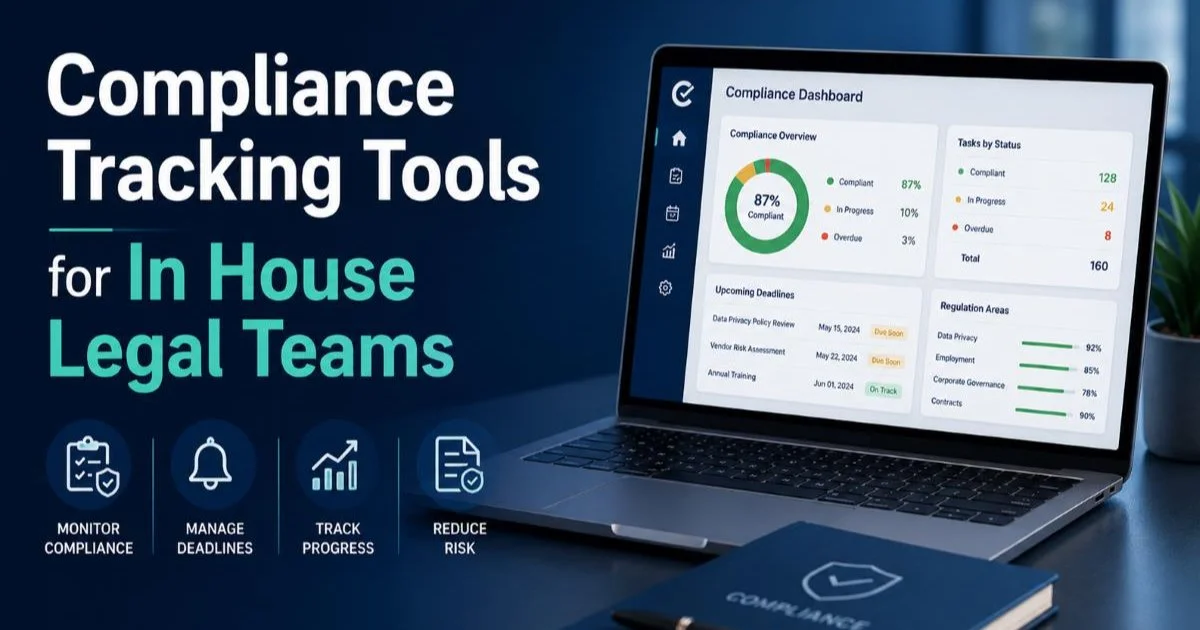
With metrics defined, NovaTech needed systems to capture the data. They adopted a contract management platform that automated intake, routing, and approval workflows. For compliance tracking, they implemented a dedicated calendar and alert system, which is the same approach recommended in resources about compliance tracking tools for in-house legal teams. Legal document organization was overhauled with standardized naming conventions, folder structures, and metadata tagging. The changes in legal document organization practices for small teams proved equally applicable at NovaTech's scale.
Rolling Out Dashboards
The operations manager built a live dashboard that updated weekly. Every Monday morning, the legal leadership team reviewed the seven metrics in a 20-minute standup. This ritual changed the team's culture more than any software purchase. Attorneys who had never thought about cycle time started proactively checking on stalled contracts. Paralegals flagged compliance deadlines weeks in advance instead of days. The dashboard made performance visible, and visibility created accountability without heavy-handed management.
"Visibility created accountability without heavy-handed management."
Resistance emerged primarily from two senior attorneys who viewed metrics as micromanagement. The general counsel addressed this head-on by framing metrics as advocacy tools, not surveillance tools. When the data showed that one attorney was handling 35% of all matters while another handled 12%, it wasn't about blame. It was about redistributing work so nobody burned out. Within three months, even the skeptics acknowledged that the data was helping them make better arguments for resources. Maintaining data integrity required ongoing effort, similar to how editing and refining content improves outcomes over time.
The technology stack wasn't exotic or expensive. NovaTech spent roughly $85,000 annually on their combined legal tech tools. The contract management system handled most of the heavy lifting for workflow automation. A separate compliance module managed deadlines across jurisdictions. They also used a proxy-based data scraping approach for regulatory monitoring, relying on infrastructure like static residential proxies to gather compliance intelligence from government portals reliably. The entire implementation took four months from kickoff to full deployment.
Technology alone doesn't produce results. Every tool NovaTech adopted was tied to a specific metric with a clear owner responsible for data quality.
The Results: What the Numbers Actually Showed
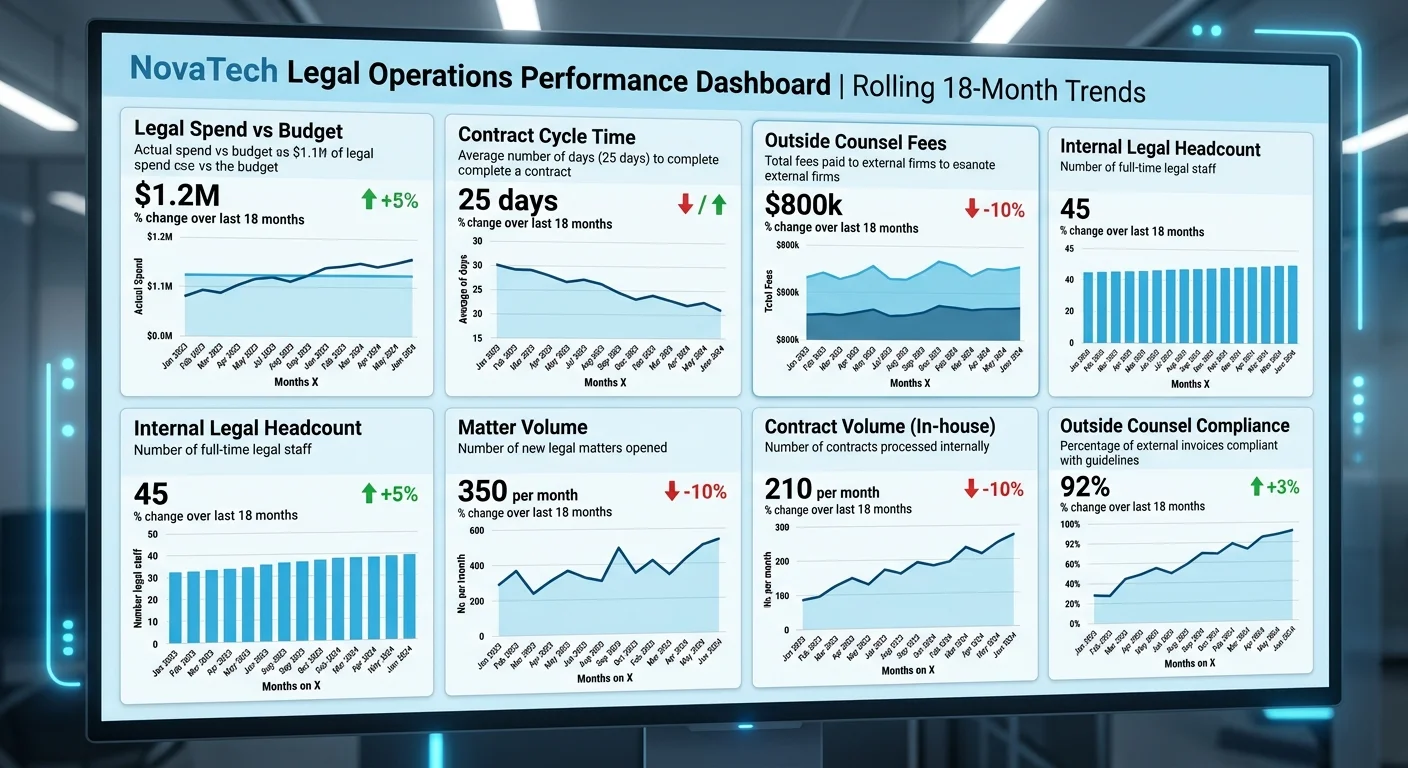
After 18 months of consistent tracking (Q2 2022 through Q4 2023), NovaTech's transformation was quantifiable. Legal operations metrics that drive better results proved their worth not in theory, but in hard numbers the CFO could present to the board. Every single metric improved, though some exceeded targets while others fell slightly short. The overall trajectory was unmistakable: this was a legal department that had fundamentally changed how it operated.
Financial Impact
Outside counsel spend dropped from 2.1% of revenue to 1.4%, beating the 1.5% target. In absolute dollars, that represented $620,000 in annual savings. The reduction came from two sources: bringing more routine work in-house (enabled by better workload distribution) and negotiating alternative fee arrangements with outside firms using actual matter data. When the general counsel could show a firm that 40% of billed hours went to document review that could be handled internally, the negotiation became straightforward.
Operational Improvements
Contract cycle time dropped from 23 days to 9 days. The sales team noticed immediately. Deal velocity improved, and complaints about legal being a bottleneck essentially disappeared. Compliance deadline adherence rose from 74% to 96%, surpassing the 95% target. That single metric eliminated the regulatory risk that had caused the EU filing incident. Document retrieval time fell from 14 minutes to 4.5 minutes on average, freeing up approximately 11 hours per week across the team.
Stakeholder satisfaction jumped from 5.2 to 8.4 out of 10, the single largest improvement in percentage terms. Business units reported that the legal team felt more responsive, more transparent, and easier to work with. The matter resolution time dropped from 18 days to 7 days. Perhaps most importantly, the legal team's budget request for two additional hires was approved without debate. The data justified the investment in a way that anecdotal arguments never could have. Legal operations metrics that drive better results gave NovaTech's team a voice at the executive table.
Frequently Asked Questions
?How did NovaTech reduce contract turnaround from 23 days to 9 days?
?Is hiring a legal ops manager necessary or can attorneys track metrics themselves?
?How long before compliance tracking dashboards show measurable ROI?
?What's the biggest mistake legal teams make when starting to track metrics?
Final Thoughts
NovaTech's story isn't extraordinary. It's replicable. Any in-house legal team that commits to identifying, tracking, and acting on the right metrics can achieve similar results.
The key ingredients were leadership buy-in, a small number of well-chosen KPIs, consistent measurement habits, and a willingness to let data guide decisions. Legal operations metrics that drive better results aren't about perfection. They're about progress you can actually see and prove to the rest of the organization.
Disclaimer: Portions of this content may have been generated using AI tools to enhance clarity and brevity. While reviewed by a human, independent verification is encouraged.